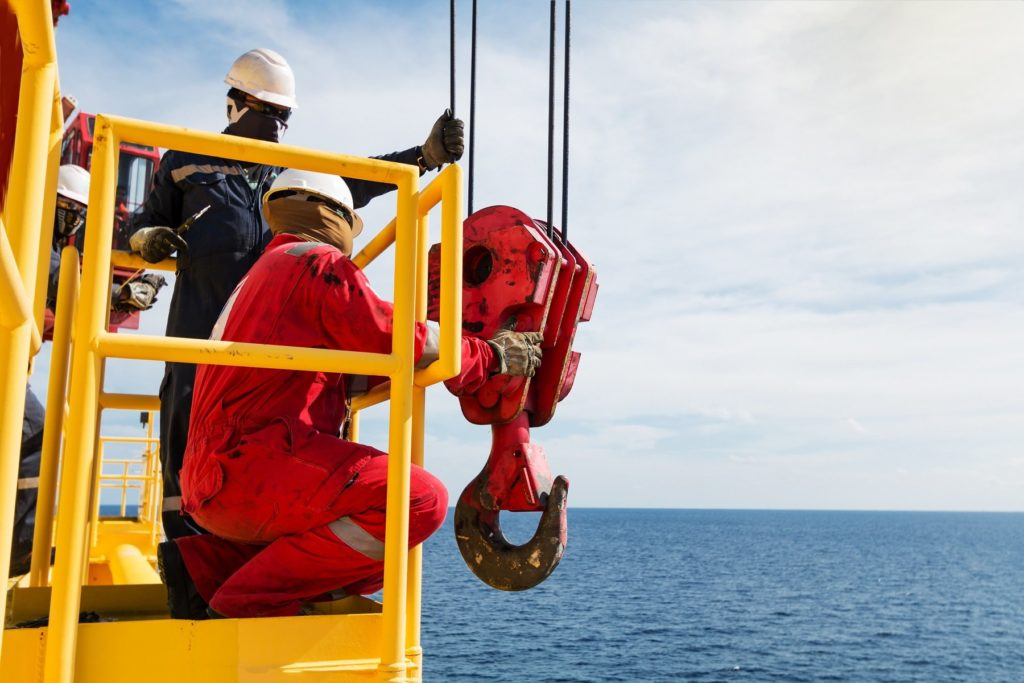
Working offshore in Texas waters is one of the most physically demanding and legally complex occupations in the country. When an accident happens, whether a fall on a slippery deck, an equipment failure on a drillship, or a chemical exposure on a barge, the path to compensation is rarely straightforward. Unlike workers in land-based industries who typically file a standard workers’ compensation claim, maritime workers must navigate a layered web of federal laws where a single classification decision can mean the difference between receiving full damages and walking away with far less.
Knowing which law applies to your situation, and fighting back if your employer gets it wrong, is where everything begins. If you were injured while working in Texas waters or on the Gulf Coast and are unsure which legal framework applies to you, speaking with a maritime injury attorney Texas as early as possible is one of the most important steps you can take.
What Is the Jones Act and Who Does It Protect?
The Jones Act, formally known as the Merchant Marine Act of 1920, is a federal law codified at 46 U.S.C. Section 30104. Its core purpose is straightforward: it gives qualifying maritime workers the right to sue their employer for negligence when they are injured on the job. That right does not exist under standard workers’ compensation systems, which are no-fault and cap the damages you can recover.
Under the Jones Act, an injured seaman can pursue compensation for medical expenses, lost wages, pain and suffering, and loss of future earning capacity. The negligence standard used in Jones Act cases is often described as a “featherweight” burden because even the smallest degree of employer negligence that contributes to the injury is enough to support a claim, making it significantly more favorable to injured workers than typical personal injury standards.
The Seaman Status Test: Why Classification Is Everything
Here is where things get complicated. The Jones Act only applies to “seamen,” and not everyone who works on or near water qualifies. Courts use a two-part test to determine seaman status:
- The worker must contribute to the function or mission of a vessel in navigation.
- The worker must have a substantial connection to that vessel, both in duration and nature. The commonly used benchmark is that the worker spends at least 30 percent of their working time aboard the vessel.
The “vessel in navigation” requirement is broader than many workers realize. Drillships, offshore supply vessels, tugboats, crane barges, and even semi-submersible platforms can qualify. Fixed oil and gas platforms generally do not, which is why workers on those structures often fall under a different law entirely, the Longshore and Harbor Workers’ Compensation Act.
Jones Act vs. LHWCA vs. Standard Workers’ Compensation
Three separate legal frameworks can potentially apply to a maritime or offshore worker’s injury claim, and each delivers very different outcomes. Understanding the distinctions is essential before you accept any settlement or benefit offer from an employer or insurer.
| Factor | Jones Act | LHWCA | Workers’ Comp (TX) |
| Who qualifies | Seamen / vessel crew | Longshore / dock workers | Land-based employees |
| Negligence required | Yes (featherweight standard) | No (strict liability) | No (no-fault) |
| Pain & suffering | Yes | No | No |
| Maintenance & cure | Yes | No | No |
| Unseaworthiness claim | Yes | Limited | No |
| Federal or state law | Federal | Federal | State (TX TWCA) |
What Does the LHWCA Cover?
The Longshore and Harbor Workers’ Compensation Act (LHWCA) covers dock workers, harbor workers, and employees who work on fixed platforms and similar structures. It is a no-fault federal workers’ compensation system, meaning you do not need to prove negligence to receive benefits. However, it does not allow recovery for pain and suffering, which can dramatically reduce the total value of your claim.
Workers on the Outer Continental Shelf employed on fixed platforms may also fall under the Outer Continental Shelf Lands Act (OCSLA), which typically applies the LHWCA framework as the compensation mechanism.
What About Texas Workers’ Compensation?
Texas is unique in that it does not require most private employers to carry workers’ compensation insurance. That alone adds complexity for onshore oil field and refinery workers. For offshore workers, however, federal maritime law almost always takes precedence over the Texas Workers’ Compensation Act. Filing a state workers’ comp claim may actually cut off your right to pursue more valuable remedies under federal maritime law, a mistake workers make far too often, usually because their employers steer them in that direction.
Maintenance and Cure: A Unique Maritime Obligation
One of the most important protections the Jones Act provides is the right to maintenance and cure. This is a legal obligation that exists completely separate from negligence, meaning your employer owes it to you regardless of who caused the accident.
Maintenance refers to a daily living allowance paid to an injured seaman who cannot work. It is intended to cover housing and food while you recover. Maintenance rates typically range from $20 to $45 per day, though courts have awarded higher amounts in certain jurisdictions.
Cure refers to your employer’s obligation to pay for all reasonable and necessary medical treatment until you reach maximum medical improvement (MMI), the point at which your condition is as good as it is going to get.
Employers have a history of terminating maintenance and cure payments prematurely or disputing the rate they owe. If your employer refuses to pay or undervalues these benefits, that is an independent basis for additional damages, including attorney’s fees in cases of willful non-payment. Working with experienced offshore worker compensation counsel from the start ensures these obligations are properly enforced and that you are not left managing a complex legal fight while trying to recover physically.
Unseaworthiness Claims: A Second Path to Compensation
In addition to a Jones Act negligence claim, qualifying seamen have the right to file an unseaworthiness claim against the vessel owner. This claim does not require proving negligence. Instead, it requires proving that the vessel, its equipment, or its crew was not reasonably fit for its intended purpose at the time of the injury.
Examples of conditions that can support an unseaworthiness claim include:
- Defective or improperly maintained equipment
- Wet, oily, or otherwise dangerous deck surfaces
- Inadequate crew training or improper staffing
- Failure to provide appropriate personal protective equipment
- Broken safety systems or missing safety gear
Because unseaworthiness is a strict liability claim, it can be easier to prove than negligence in some cases. Many maritime injury attorneys pursue both claims simultaneously to maximize recovery.
How Energy Companies Misclassify Workers to Limit Liability
Worker misclassification is one of the most significant and least-discussed problems in the offshore energy industry. Energy companies working in the Gulf of Mexico have a strong financial incentive to classify their workers in ways that prevent Jones Act claims from being filed.
Common misclassification tactics include:
- Labeling workers as “independent contractors” rather than employees, even when the company controls their schedules, tools, and work processes
- Assigning workers primarily to fixed platforms so they fall below the 30 percent vessel time threshold
- Rotating workers between assignments to artificially dilute their connection to any single vessel
- Pressuring injured workers to sign broad liability releases shortly after an injury, before the worker understands which law applies
Courts have repeatedly scrutinized these practices. The classification analysis looks at the totality of the relationship with the vessel, not just job title or contract language. If you were misclassified and missed out on Jones Act protections, a skilled maritime attorney can challenge that classification in court.
It is worth noting that just as understanding legal classification matters in maritime cases, understanding why qualified legal representation matters is important across all injury contexts. A detailed breakdown of why a truck accident attorney is necessary illustrates this same principle: without an attorney, injured workers often accept far less than their case is actually worth.
The Hidden Cost: Mental Health and Family Impact After Offshore Injuries
The legal and financial consequences of a serious maritime injury are significant, but they are often accompanied by a less visible toll. Workers who suffer catastrophic injuries, amputations, spinal trauma, or traumatic brain injuries frequently develop post-traumatic stress disorder (PTSD), depression, and anxiety. The extended periods of isolation that come with offshore work already create psychological strain, and a serious injury compounds it dramatically.
What is especially underappreciated is the ripple effect on families. When a parent returns from an offshore injury carrying untreated trauma, their children, particularly teenagers, can develop what mental health professionals call secondary traumatic stress. Research on PTSD by proxy in military families sheds important light on this pattern: when a parent’s trauma goes unaddressed, it reshapes family dynamics in ways that can affect a child’s mental health for years. The parallels between offshore workers and military personnel are real, including prolonged absence, physically dangerous environments, and the sudden disruption caused by a serious injury.
Recognizing this dimension of offshore injury claims matters both for injured workers and their attorneys. In cases involving permanent disability or severe psychological harm, damages related to the impact on family life and the worker’s quality of life can substantially increase the total value of a claim.
Common Questions Offshore Workers Ask After a Maritime Injury
Does the Jones Act apply if I work on an oil platform?
It depends on the type of platform. Fixed platforms generally do not qualify as “vessels in navigation” under the Jones Act. Workers on those structures typically fall under the LHWCA or OCSLA. However, if you spend a significant portion of your time on drillships, floating platforms, or supply vessels that move between locations, seaman status may still apply.
What happens if I signed a release after my injury?
Releases signed immediately after an injury, particularly before a full medical evaluation, may be challenged in court as not knowing and voluntary. Maritime law has specific protections against releases obtained under duress or without the seaman’s full understanding of their legal rights. An attorney can review the circumstances and advise whether the release can be set aside.
Can I be fired for filing a Jones Act claim?
No. It is illegal for maritime employers to terminate or retaliate against workers for filing a Jones Act claim. If retaliation does occur, it creates an additional basis for legal action against the employer.
How long do I have to file a Jones Act claim?
The statute of limitations for a Jones Act claim is three years from the date of injury. However, maintenance and cure obligations begin immediately, and waiting too long to consult an attorney can result in lost evidence and weaker legal arguments. Acting promptly is always in your best interest.
What Offshore Workers in Texas Should Do Immediately After an Injury
Following these steps can protect your legal rights and the value of your potential claim:
- Report the injury in writing to your supervisor as soon as physically possible. Document the date, time, location, and circumstances.
- Seek immediate medical attention and keep records of every diagnosis, treatment, and provider you see.
- Do not sign any release, settlement agreement, or statement from your employer or their insurer without legal review.
- Preserve all evidence related to the accident, including photographs, witness contact information, maintenance logs, and safety reports.
- Avoid giving recorded statements to insurance adjusters without attorney guidance.
- Contact a maritime injury attorney to evaluate your seaman status, the applicable law, and your compensation options before making any decisions.
Final Thoughts
Navigating a maritime injury claim in Texas waters is rarely simple. The interaction between the Jones Act, the LHWCA, OCSLA, and state workers’ compensation creates a legal environment where your classification as a worker directly controls what you can recover. Energy companies have both the legal teams and the financial motivation to minimize those claims.
Injured offshore workers who understand their rights, challenge improper classifications, and act quickly tend to recover significantly more compensation than those who rely solely on what their employer offers. Legal guidance is not just helpful in these situations. For most maritime workers dealing with serious injuries, it is the deciding factor between receiving fair compensation and settling for far less than a claim is worth.